
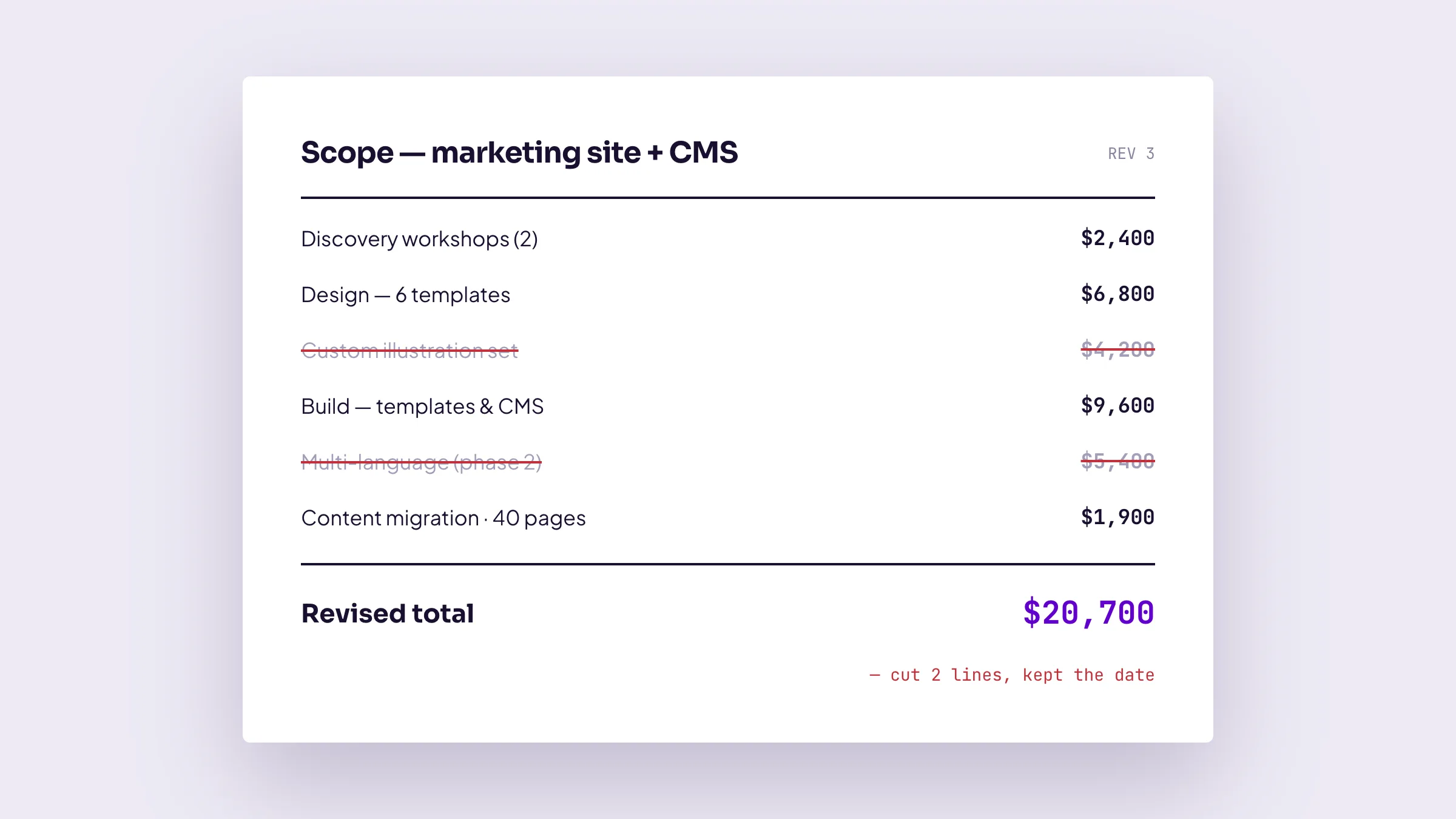
A single project price gives the client one lever: negotiate it down. A line-by-line price gives them a better one: remove something. The second conversation is faster, less adversarial, and ends with a scope both sides believe in.
A single project price can only be argued about. A line-by-line price can be edited. When a client needs to reach a number, itemising lets them remove scope instead of removing margin — which protects the quality of what remains and ends the negotiation in one meeting instead of three.
The most expensive sentence in this industry is "can you do it for X". Not because of the discount, but because of what agreeing to it does to the next four months.
#What one number actually communicates
A single figure says: this is a package, take it or leave it. The only move available to a buyer who cannot afford it is to ask for the same package for less. And the only move available to the seller who wants the work is to say yes and then quietly find the difference somewhere — usually in testing, documentation, or the discovery phase that would have caught the problem in week two.
Nobody decides to do that. It just becomes the only remaining option once the number has been agreed and the scope has not changed.
#What a priced line item communicates instead
Each line carries three things: what it is, how long it takes, and what it buys the business. Multi-language support, three weeks, lets you serve the Arabic-speaking half of your market. Live inventory sync, two weeks, stops you overselling stock you do not have.
Now the conversation changes shape entirely. The client is not asking for a discount, they are asking whether they need the inventory sync in phase one. That is a question they are far better qualified to answer than we are, and it usually takes them about ninety seconds.
#The uncomfortable part
Sometimes they cut a line you wanted to build. This feels like losing, and it is not.
A project that ships at eighty percent of the original scope, on time and at full quality, is worth considerably more to both parties than one that ships at a hundred percent with the testing budget spent. And the line they cut is still on the estimate, priced, ready for the conversation in month five when the business case for it is obvious.
#Change requests
The same discipline applies after kickoff, including for changes that look small. Every request gets an estimate before it gets built. It takes twenty minutes and it removes the single most common source of end-of-project resentment: a running total nobody agreed to, assembled from favours nobody priced.
- One number invites negotiation on price. Many numbers invite decisions about value.
- Every line needs a price, a duration and one sentence of what it buys the business.
- Change requests get an estimate before they get built — always, including the small ones.
- The client cutting a line is a success, not a lost sale. It is the fastest route to a scope that ships.